
Oratorio della Grotta
Description
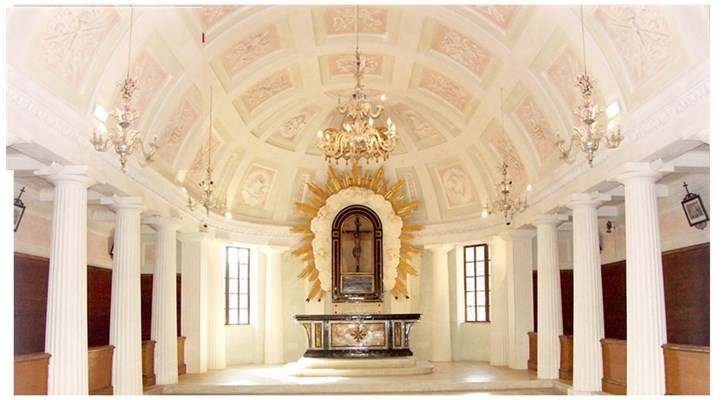
The Oratorio della Grotta is an integral part of the Albani Museum, where visitors can admire a wide array of ecclesiastical furnishings dating from the 13th to the 19th century: illuminated manuscripts, filigree and enamel chalices and reliquaries, majolica and porcelain, objects made of amber, gold and silver, crystal, ivory crosiers, liturgical vestments woven with precious metals, painted panels and canvases.
The Oratorio della Grotta is divided into four chapels. each dedicated to a significant moment in Christ's Passion: the Nativity, the Crucifixion, the Pietà, and Calvary.
The first chapel is dedicated to the Nativity of Christ. On the marble altar is the artwork Adoration of the Shepherds by Emilio Taruffi, created in 1682. The vault is decorated with a fresco depicting a Glory of Angels by Andrea Giannotti, painted around 1712–1713.
The second chapel, dedicated to the Crucifix, houses a wooden crucifix from the 15th century. Damaged by the collapse of the dome in 1789, it was later restored in Neoclassical style by the architect Giuseppe Valadier.
The third chapel contains the marble group of the Pietà, sculpted by the Florentine artist Giovanni Bandini in 1597. This work was originally commissioned for the mausoleum of Duke Francesco II Maria della Rovere.
The fourth chapel is dedicated to Calvary and hosts the sculptural group Lamentation over the Dead Christ, created by a workshop from the Emilia-Romagna region in the second or third decade of the 16th century. This work conveys the faithful’s participation in the “experience of the tomb” and is part of the tradition of sacred representations that punctuated the liturgical life of Christian communities since the Middle Ages.