
Duomo
Description
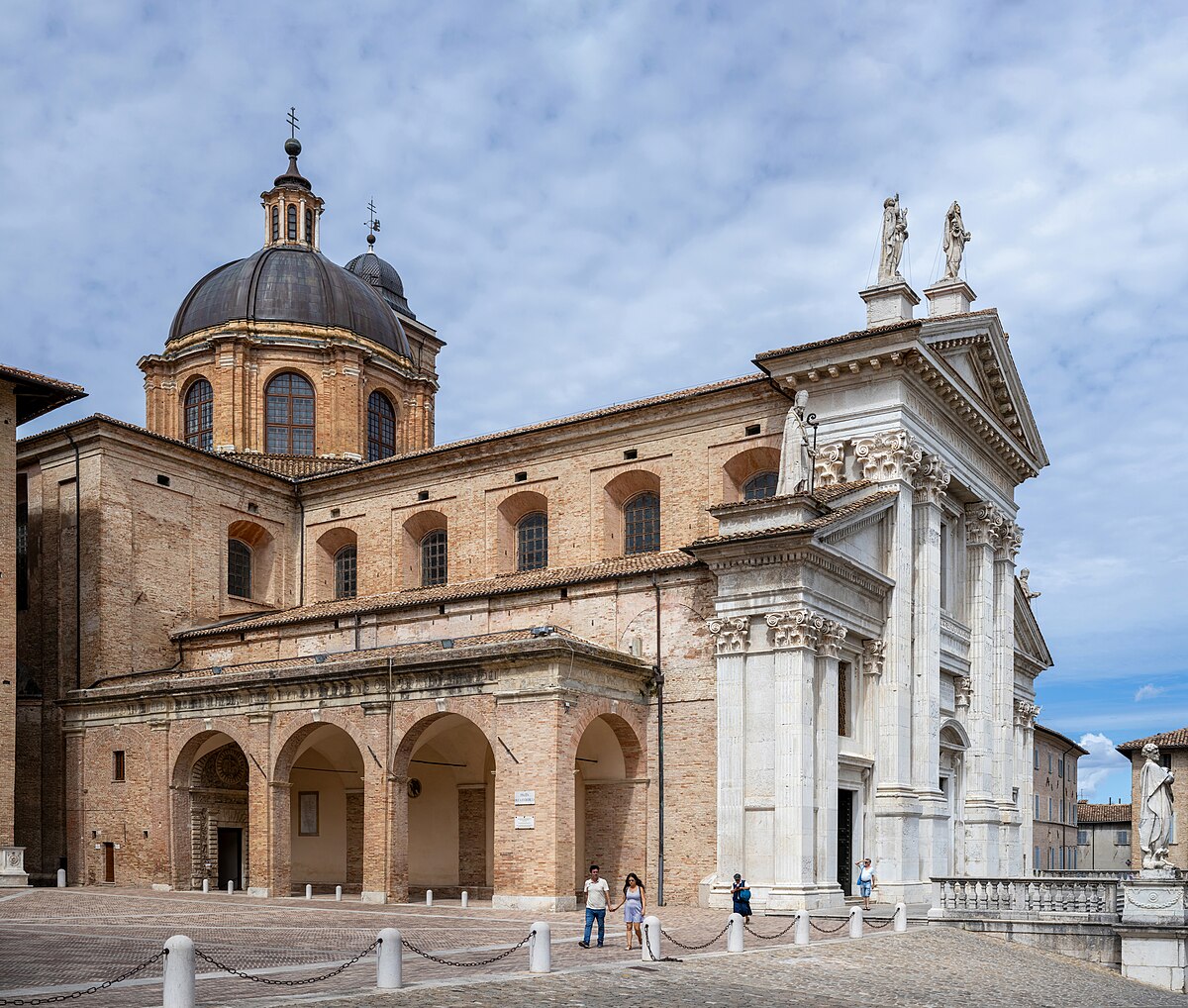
Next to the Ducal Palace of Urbino stands the Cathedral of Santa Maria Assunta, also known as the Duomo of Urbino. With its sober grandeur, it is the city's main religious building and a symbol of its artistic and spiritual heritage.
The cathedral has ancient origins, dating back to 1021, but its current appearance began to take shape in the second half of the 15th century. It was Duke Federico da Montefeltro who commissioned its reconstruction, entrusting the project to the Sienese architect Francesco di Giorgio Martini. The new structure, inspired by the Renaissance ideals of harmony and rationality, was designed with a Latin cross plan, reflecting the elegance and humanist vision of Urbino at the time.
The Duomo suffered severe damage during the 1789 earthquake, which caused the collapse of its dome. The reconstruction was entrusted to Giuseppe Valadier, one of the leading Italian Neoclassical architects, who designed the new façade and reorganized the interior with a refined, essential style. Natural light, a central element in the new architectural concept, helps create a serene and harmonious atmosphere.
Inside, the cathedral houses numerous important works of art. Particularly notable is the "Last Supper" by Federico Barocci, a Mannerist masterpiece commissioned by Francesco Maria II Della Rovere. The artistic heritage is further enriched by works from Claudio Ridolfi, Raffaello Motta, and Neoclassical frescoes in the dome by artists from the Roman school.
The Cathedral of Santa Maria Assunta is not just a place of worship, but a living testimony to the history and culture of Urbino. Here, Renaissance and Neoclassical styles merge in perfect harmony, offering visitors a unique experience of spirituality, art, and historical memory.